Remote Brainstorming for Remote Teams

Althea
•


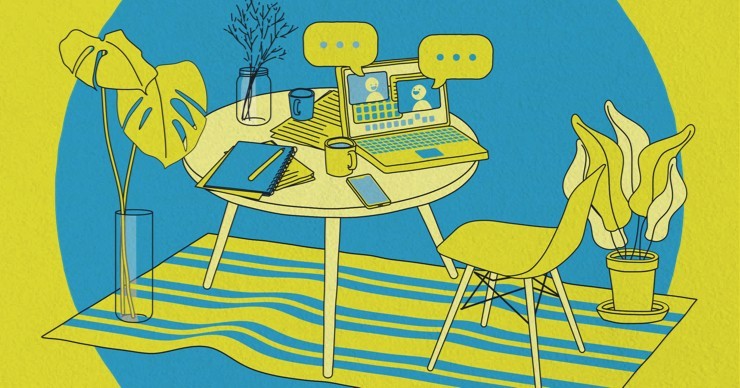
There comes a time in every Design Team’s journey where they’re up against a wall – everyone needs to block some time, put pen to paper, and thrash out the problem. The energy of problem solving together, people thinking aloud (those mini world-wars…) and eventually coming up with action items is a great way to tackle an issue. However, as the world becomes more digital, teams are often going to be distributed geographically. Here’s how you can brainstorm remotely without compromising on the action.
At DesignCoz, we like the Lightning Decision Jam (LDJ) methodology. It helps to come up with actionable solutions to specific problems, and allows us to take everyone’s opinion on board in a highly structured & interactive fashion. While there are umpteen articles and videos about how to employ LDJ, here’s a list of 4 best practices that we’ve cornered after running it successfully a few times.
Give context to your participants (before the session)
The beauty of brainstorming is that there are no “experts”, and all ideas are good ideas, at the beginning. However, it is important to be mindful of who the participants are and how much they understand the problem at hand. The Solution: Set up the context a day or two BEFORE the session. This ensures the stakeholders get a rough idea & context to the session.
We usually send out introductory emails carrying the following details:
Duration
Agenda
Medium (e.g. if you’re using a new tool, include a link to a short tutorial)
Requirements from the participants
Expected Outcome
(Pro-tip: Remember to sound warm and inviting in this email – you want people to be excited about this!) In case this cannot happen for your organization, take the first 10 minutes of the session to go over these details and set the background properly. It sets your session on the right track.
Take a Time-Out to Create Synergy
Depending on the challenge set for the brainstorm, your stakeholders will possibly be from varying backgrounds, ages, and even geographic locations. They will all come with their own implicit assumptions, requirements, and in a remote medium, distractions. It is crucial to bring everyone together at the start if you want to have a successful session. This is even more crucial if the stakeholders do not know each other (break the ice, the awkwardness).
Set aside a good 10-12 minutes initially to create synergy and get people comfortable on the call. Most common & predictable way – Get To Introducing Themselves (zzzzzzz..) Instead, we like to play a few ice-breaker games! The good folks at IDEO have compiled a list of games, check them out here.
Tweak the Process and Iterate
As with most experiences, the first time you try to run the session, it may not go as planned. We’ve had problems ranging from overshooting the time, to unengaged participants. It’s hard to get the nuances right in the first shot. The structure we’ve put in place has taken us time and multiple iterations.
Try it a few times with different variations:
Diverse participants (Someone working on the product, someone from a completely different team, and maybe even someone unrelated to design)
Different time durations
Unique problems to brainstorm on (design problem v.s. organizational problems)
By running the session through such a variety, you will be better placed to figure out a formula that works best for you and your team. This also ensures that we know our process inside out before having high stakes sessions (you don’t want a dull client session, right?)
Moderator(s) is the Soul
Arguably, the moderator has the most challenging job in the session, as they are in charge of the set-up, flow, process, management, stakeholders and eventually the outcome, the solution. Basically, they are the soul of the act. We’ve defined the job role even further for you: Before, During and After the session.
Before the session:
Our moderators like to go through the flow again and again.
What will happen first?
How much time will it require?
How will it be connected to the next section?
Thorough planning is what keeps the moderator prepared & confident throughout the session.
During the session:
It is important to ensure everyone on the call is heard, and no one is taking up too much or too little time to share opinions. The moderator must be attentive to the participants and create a safe space for everyone to share their thoughts (cue back to our point 2). To deftly navigate these, and other issues that might come up in the session, you should choose a good moderator & ensure that they practice the flow a few times before the big day.
After The Session:
Summarizing the session is important & actioning out the solution arrived upon. It’s the moderator’s job to send across an email summary to all participants & do ask the participants for session feedback (an honest one of course…) Actioning out the solution generated can either be done with further discussion or breaking it up into smaller items and creating a timeline for execution.
Takeaway:
In summary, we believe the LDJ is a powerful structure to run remote brainstorming sessions. Remember that our points above are suggestions from our own experience – don’t be afraid to ignore them all and go with the flow!
We’d love to see you give remote brainstorming a try! Let us know how it goes!